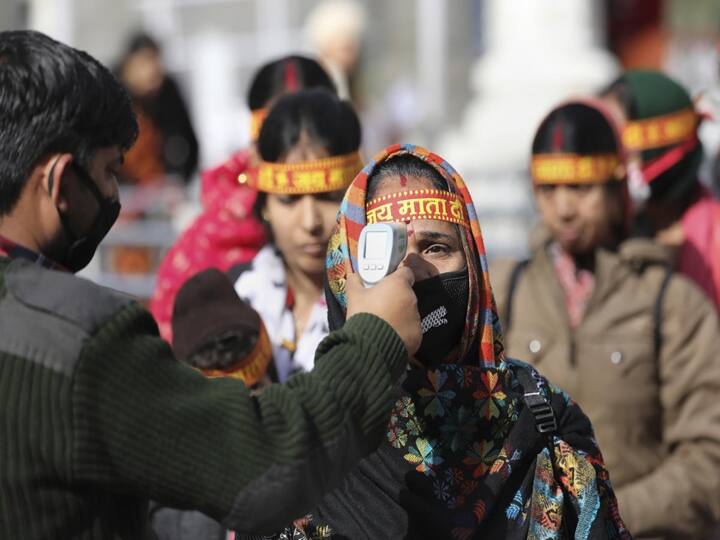
- To being with, there will be a limit of 2,000 pilgrims each day during the first week.
- Thereafter a maximum of 5,000 pilgrims may be allowed per day till September 30, 2020 - there is a cap of 500 yatris for those coming from outside Jammu & Kashmir.
- The registration for the yatra has to be done online to avoid unnecessary physical contact with crowding.
- Yatris coming from other states and red zones within J&K have to undergo the mandatory Covid-19 antigen test. People will be allowed to proceed only if they test negative.
- Only 600 people, including pilgrims, staff members and security personnel, will be allowed in the main Bhawan area. For this, pilgrims will be staggered accordingly.
- The route towards the main shrine will be put to use for staggering the pilgrims to ensure social distancing among them.
- Wearing a mask is mandatory for everyone.
- People who are over the age of 60, people with co-morbidities, pregnant women, children below the age of 10 have been advised not to visit any religious place in J&K.
- Pilgrims should not stay inside the main shrine after darshan.
- Cleaning and sanitization protocol at all places including the holy caves and main shrine has to be followed.
- Enough points for cleaning hands and feet have to be provided.
- All places such including toilet blocks, bathing ghats, guest houses, battery cars, Helicopters and Cable car have to be sanitised regularly and proper hygiene practises have to be followed.
- Dedicated facilities for Isolation and Quarantine have to be set aside.
- Use of ponies/equines disallowed until further orders.
- Touching of statues, idols and holy books should not be allowed and large gatherings to be prohibited.
- It is important that required social distancing and other preventive measures are followed in those premises.
- Visitors have to be staggered. Footwears to be preferably taken-off inside own vehicle. If needed they should be kept in separate slots for each individual/ family by the persons themselves.
- Social distancing norms (a minimum distance of 6ft) need to be followed.
- Recorded devotional music or songs may be played and choir or singing groups should not be allowed.
- Common prayer mats should be avoided and devotees should bring their own mat or piece of cloth to sit on, which they may take back with them.
- No physical offerings like prasad/distribution or sprinkling of holy water, etc should be allowed.
- Community kitchens, langars, 'Ann-Daan' etc at religious places should follow physical distancing norms while preparing and distributing food.
- People aged above 65, having comorbidities, pregnant woman and children below the age of 10 years are advised to stay at home and avoid visiting religious places.
- Hand hygiene (sanitizer dispenser) needs to be ensured and the entrance needs to mandatorily have thermal screening.
- Asymptomatic people should be allowed inside the premises with face cover or masks.
- Installation and use of Aarogya Setu App advised to all.
- The management must ensure frequent cleaning and disinfection of the floors and other surfaces.
- In case of a suspect or confirmed case in the premises, the ill person should be placed in an isolated room or area and the nearest medical facility (hospital/clinic) should be informed. The premises should be disinfected if the person is found positive.