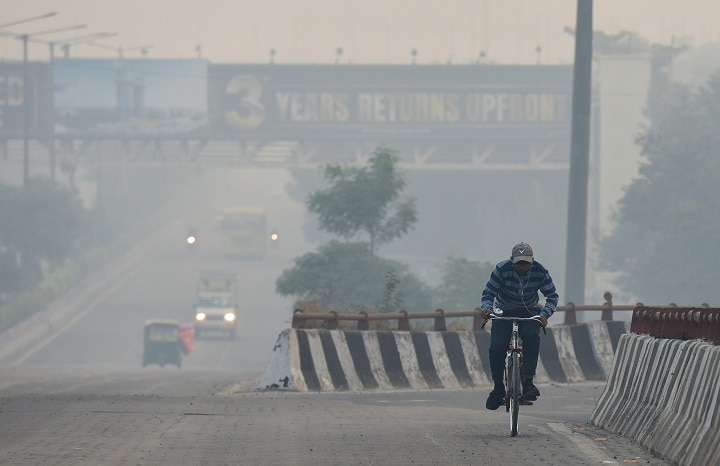
The manifestation of rising air pollution in respiratory organs is well recognised and talked about in the public discourse. However, not many people are aware air pollutants have the potential to increase the risk of stroke.
Evidences, supported by epidemiological studies and researches, have emerged which show a rise in pollution is synonymous with the increase in incidents of strokes. Meanwhile, experts have also observed that exposure to the polluted air for a prolonged period could advance the risk of developing strokes. Dr. Vinit Suri, senior consultant, neurology at Indraprastha Apollo Hospital, and immediate past president of the Indian Stroke Association, said that air pollution is also being considered as one of the key factors for stroke and cardiovascular diseases (among other co-morbidities). "Several trials, experiments, and epidemiological studies have been conducted to compare samples and patient case studies from areas that are low and high in toxicity of particulate matter. These studies have found that the majority of stroke patients reported from areas that recorded high levels of air pollution," he said. Particulate matter which causes air pollution is a major cause of stroke
"Particulate Matter (PM) especially PM 2.5 is a major risk factor responsible for stroke. These particles enter the lungs and further travel to the blood vessels and might reach the brain and heart, causing major damage to the organs. Through the lungs these particulate matters can go directly into the other organs also," Suri added. Dr Aparna Gupta, a neurosurgeon at Indian Spinal Injuries Centre (ISIC) said that the manifestations of air pollution in the body pose a great threat for brain Ischemic stroke. "Air pollution causes a chronic inflammatory response, oxidative stress, blood vessels endothelial cell injury, pro-thrombotic (clotting) state, narrowing of arteries, and blockage of blood vessels or arteries. All these processes are known to increase the risk of either Ischemic stroke or transient ischemic attack," she noted. Prof (Dr) Manjari Tripathi, head of neurology at the All India Institute of Medical Sciences (AIIMS) said that strokes incidents are bound to increase with a spike in pollution. "Studies show exposure to the air pollution level at 22 parts per million (ppm) of PM2.5 is equivalent to smoking a cigarette. Smoking is already a risk factor for stroke. While people smoke intermittently, the intake of polluted air is constant. So there is no escape from smoking whether one does it literally or not. It is in the air we breathe! Clearly, the situation leads to an increase in the stroke incidents," she explained. Dr Samir K. Kalra, neurosurgeon at the Sir Ganga Ram Hospital, observed that the blood is getting thicker, arteries losing flexibility and average blood pressure rising with the increase in the air pollution levels.