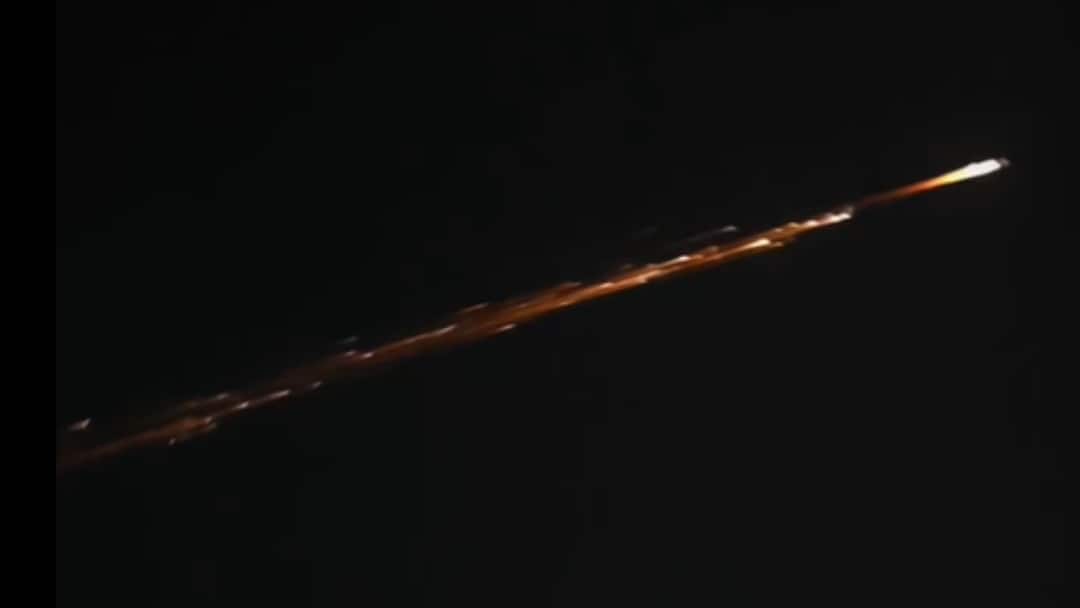
Residents of Delhi, Gurugram, and parts of Rajasthan were left awe-struck in the early hours of Saturday when a blazing fireball streaked across the night sky. The dazzling sight, first seen around 1:20 am on September 20, sparked speculation of a meteor shower. However, experts now believe the luminous trail was more likely linked to debris from a Chinese rocket.
What Experts Are Saying
Initial reports suggested the fireball could be a bolide, a particularly bright meteor. But tracking data points to a different source: the Long March 3B rocket stage (CZ-3B R/B, ID 61188), launched by China and predicted to re-enter Earth’s atmosphere on September 19.
According to the Aerospace Corporation, the re-entry was forecast for 16:45 UTC (10:15 pm IST) that evening, within a four-hour uncertainty window. The timing aligns closely with the spectacular light show witnessed across northern India, making space debris the most likely explanation.
Eyewitness Accounts Flood Social Media
From Delhi NCR to western Rajasthan, people reported seeing a glowing object racing across the sky before vanishing in a burst of light. Within minutes, social media platforms were flooded with videos and eyewitness accounts. Many wondered aloud: was it a meteor, or something far more unusual?
Why Meteor Showers Are Unlikely
Natural fireballs do occur during meteor showers, but experts note that this event did not coincide with any such predictable activity. Combined with Aerospace Corporation’s re-entry forecast, the evidence points strongly toward an uncontrolled descent of discarded rocket hardware.
So far, neither the Indian Space Research Organisation (ISRO) nor the China National Space Administration (CNSA) has issued any statements. The absence of official confirmation has fueled concern, especially given China’s history of uncontrolled Long March rocket re-entries that have drawn international criticism.
The Risks Of Falling Space Debris
Most fragments from space debris burn up harmlessly in the atmosphere. Yet, larger components sometimes survive the fiery plunge and can pose risks if they crash in populated areas. Fortunately, no reports of injuries or damage have surfaced from Friday night’s incident.
Experts warn that such events may become increasingly common as the number of global satellite launches grows. They stress the urgent need for international cooperation to ensure safer and more transparent space operations.