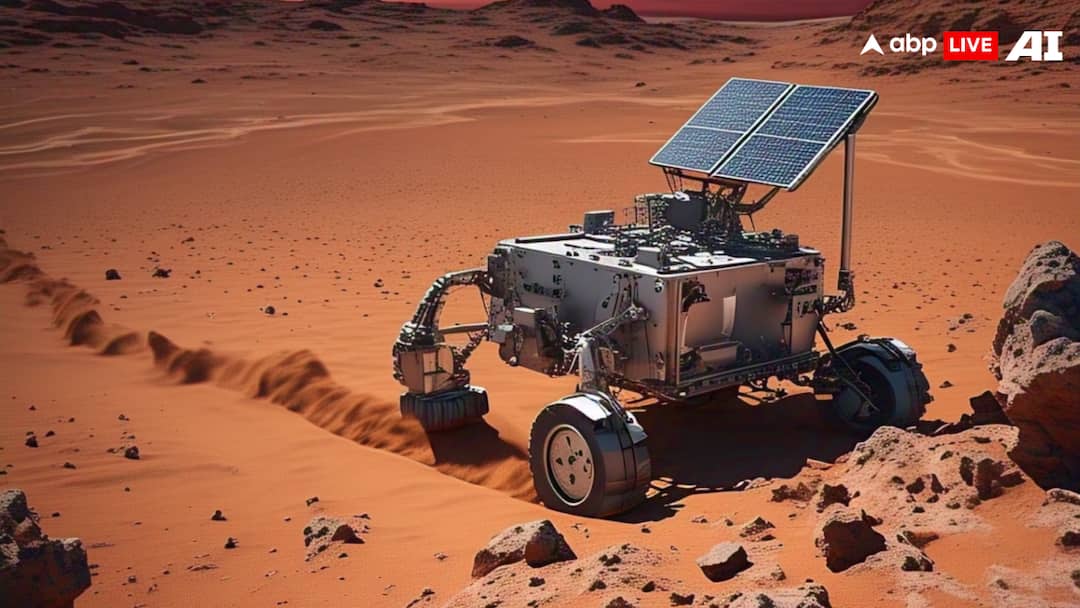
NASA's Perseverance rover has uncovered its most promising evidence so far of potential life on Mars, sparking fresh excitement among scientists. A mudstone core drilled from the Jezero Crater has revealed unusual minerals and textures that, on Earth, are often linked to microbial activity.
The sample, taken from a rock named Chevaya Falls in July 2024, contained vivianite (an iron phosphate) and greigite (an iron sulfide), both typically formed in water-rich, oxygen-poor environments. Alongside these minerals, researchers spotted "leopard spot" reaction patterns and nodules embedded in layered sediments. Such formations resemble electron transfer reactions that microbes carry out in oxygen-deprived muds on Earth.
What Do The NASA Findings Suggest?
Perseverance’s onboard instruments, SHERLOC and PIXL, also detected repeating patterns of organic carbon with phosphate, iron, and sulfur. Together, these findings represent what NASA calls a "potential biosignature", a signal that may point to past microbial life, though it could still have arisen from non-biological chemical reactions.
Jezero Crater Once Hosted Rivers
To assess such discoveries, NASA uses the Confidence of Life Detection (CoLD) scale, which requires independent verification and careful elimination of alternative explanations. For now, the Jezero findings remain low on this scale, but they mark a significant step in the decades-long search for extraterrestrial life.
Scientists believe the Jezero Crater once hosted rivers and lakes billions of years ago, creating conditions that could have sustained simple organisms. Even if the minerals turn out to be abiotic, they provide valuable insight into Mars’s chemical evolution and its ability to cycle life-essential elements like iron, sulfur, and phosphorus.
The sealed cores collected by Perseverance are slated to return to Earth in the upcoming Mars Sample Return mission, where advanced lab tests may finally confirm whether these signals were truly shaped by ancient Martian microbes.