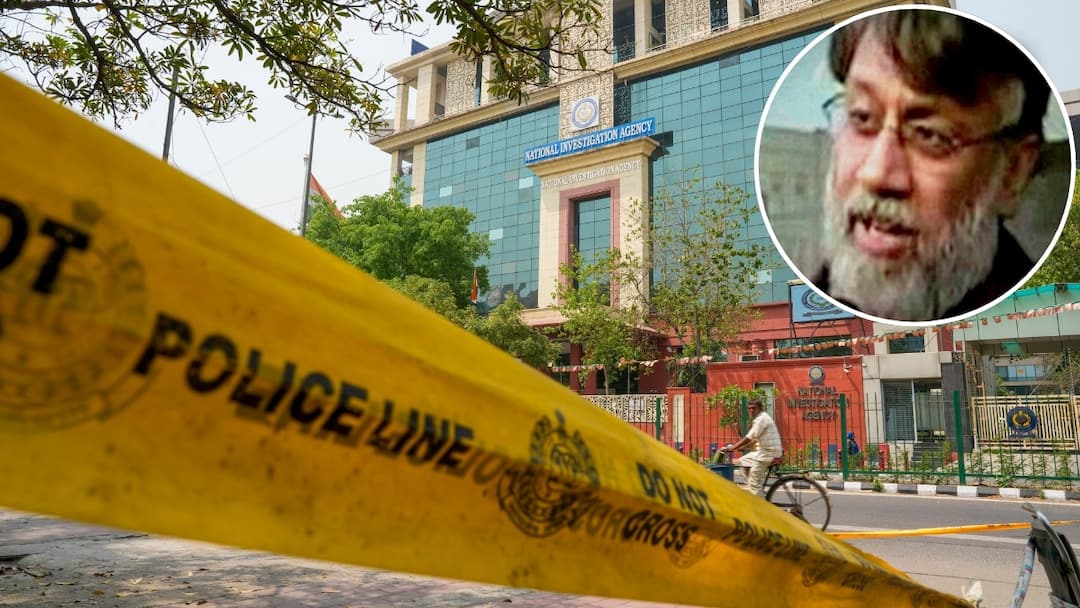
Tahawwur Hussain Rana, a key accused in the November 2008 Mumbai terror attacks, was extradited from the United States to India on Thursday and is now set to face trial under Indian law. Investigators believe his questioning could uncover critical information about the involvement of Pakistani state actors in the coordinated assault that killed at least 166 people, news agency PTI reported, quoting official sources.
The authorities are also looking to piece together details of Rana’s movements across India in the days leading up to the attack. Between November 13 and 21, 2008, Rana reportedly travelled with his wife, Samraz Rana Akhtar, to several locations including Hapur and Agra in Uttar Pradesh, as well as Delhi, Kochi, Ahmedabad, and Mumbai.
Investigators suspect these travels may point to a broader conspiracy, potentially indicating plans to target multiple locations beyond Mumbai, the report said, adding that the full extent of his role and the purpose behind these visits are expected to become clearer during interrogation.
Quoting the sources, PTI reported that a multi-agency team comprising senior Indian government functionaries and officials from law enforcement agencies brought Rana (64) from the US on a special flight that landed in Delhi's Palam Airport Thursday.
Rana was wanted by India's National Investigation Agency (NIA), which has been probing the 26/11 terror attacks case.
ALSO READ ON ABP LIVE | Tahawwur Rana In India: What Awaits 26/11 Co-Conspirator As NIA Brings Him To Delhi
NIA’s Investigation So Far
The NIA, which has been probing the 2008 Mumbai terror attacks, has long sought Rana's custody for his alleged role in the conspiracy.
Investigators believe that questioning Rana could help them uncover the involvement of "Pakistani state actors" in the attacks and may provide fresh insights that could significantly advance the ongoing probe, according to the PTI report.
The NIA investigation had earlier uncovered the involvement of several top operatives from proscribed terrorist organisations Lashkar-e-Taiba (LeT) and Harkat-ul Jihadi Islami (HuJI), the PRI report said, adding that key figures included Hafiz Muhammad Saeed (alias Tayyaji), Zaki-ur-Rehman Lakhvi, Sajjid Majid (alias Wasi), Illyas Kashmiri, and Abdur Rehman Hashim Syed (alias Major Abdurrehman or Pasha).
These operatives were allegedly acting in collaboration with officials from Pakistan’s intelligence agency, the Inter-Services Intelligence (ISI), including Major Iqbal (alias Major Ali) and Major Sameer Ali (alias Major Samir), as per the NIA.
Following the completion of its initial probe, the NIA filed a chargesheet on December 24, 2011, in a Delhi court. The accused were charged under multiple sections of the Indian Penal Code as well as the Unlawful Activities (Prevention) Act (UAPA). The charges include providing logistical, financial, and other forms of support to David Coleman Headley, one of the main conspirators, and his co-conspirators in plotting terrorist strikes in India.
The NIA had also submitted extradition requests to the United States for both Headley and Rana. Rana reportedly maintained frequent contact with Major Iqbal during this time, according to the PTI report.
As reported earlier, phone records revealed a pattern of intense communication between Rana and Headley: over 32 calls during Headley's first visit to India, followed by 23 calls in the second, 40 in the third, 37 in the fifth, 33 in the sixth, and 66 during his eighth visit. These figures highlight Rana’s alleged deep involvement in the planning of the attacks.
Investigators believe Rana was not only aware of Headley’s terror affiliations but also actively facilitated reconnaissance missions for potential targets. These included sites in Mumbai, such as the Chabad House, as well as the National Defence College in Delhi, the report said.