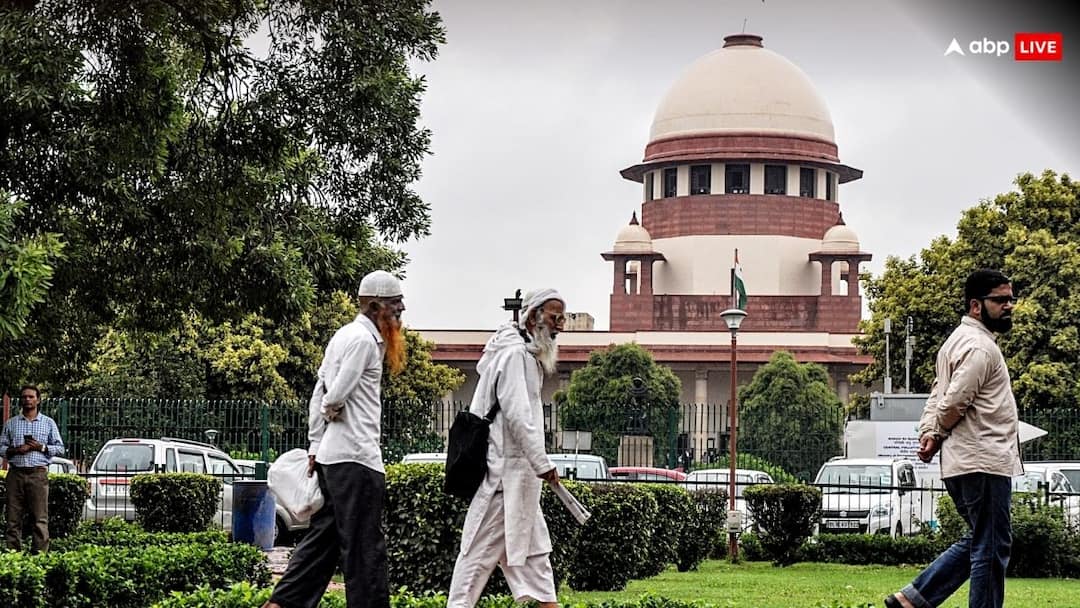
The Supreme Court will hear the case concerning the lifting of the permanent ban on firecrackers in Delhi-NCR on Friday. The central government requested additional time from the court on Wednesday, stating that it would submit a report after consulting all stakeholders.
Green Firecrackers Manufacturing Allowed, Sale Remains Prohibited
On 26 September, the Supreme Court had permitted the manufacturing of NEERI (National Environmental Engineering Research Institute) and PESO (Petroleum and Explosives Safety Organisation) certified green firecrackers. However, the court stipulated that these firecrackers could not be sold in the NCR without its permission.
A bench comprising Chief Justice BR Gavai and Justice K Vinod Chandran is overseeing the matter. Balbir Singh, the lawyer representing firecracker manufacturers, requested that the hearing be conducted before Diwali, PTI reported.
Calls For Relaxation From Delhi Government
Delhi Chief Minister Rekha Gupta has urged the court for a relaxation on green firecrackers, emphasising that Diwali is a cultural festival and that public sentiment must be considered. The court has directed that a decision be made only after consulting all relevant parties.
Previous Court Orders On Firecracker Ban
Previously, on September 26, the Supreme Court had banned the sale of firecrackers in NCR until further orders.
The bench had also instructed manufacturers not to sell any firecrackers in the NCR until the court issued a new order.
The court stated, “A complete ban on firecrackers is neither possible nor correct. We urge the Centre to talk to all stakeholders, including the Delhi government, firecracker manufacturers and sellers, and come up with a proposal to modify the complete ban on firecrackers. Come up with a practical solution that is acceptable to all.”
Later, on April 3, the Supreme Court extended the ban on firecrackers in Delhi-NCR for the entire year, rather than limiting it to the winter season. This decision is currently under challenge in court.
The court questioned why the ban applied only to Delhi-NCR and suggested that if clean air is a right, it should extend nationwide on September 12. The bench comprising CJI Gavai and Justice K Vinod Chandran stated that firecrackers should be banned across India to ensure equitable access to clean air.
GRAP-1 Implemented Amid Rising Pollution
On 14 October, after Delhi’s Air Quality Index (AQI) crossed 200, GRAP-1 measures were implemented in Delhi-NCR. These include ban on the use of coal and firewood in hotels and restaurants, strict monitoring of old petrol and diesel vehicles (BS-III petrol and BS-IV diesel), increased deployment of anti-smog guns, water sprinkling, and dust suppression techniques at construction, renovation, and maintenance sites.
Understanding The AQI
The Air Quality Index (AQI) measures pollutants including CO (carbon monoxide), ozone, NO2 (nitrogen dioxide), PM2.5 and PM10. Readings range from 0 to 500, with higher values indicating more dangerous levels of pollution.
Although an AQI between 200 and 300 is classified as “bad,” current levels have exceeded 300 in several cities across Rajasthan, Haryana, Delhi, and Uttar Pradesh. High AQI levels not only indicate poor air quality but also signal increased health risks and the potential onset of pollution-related diseases.