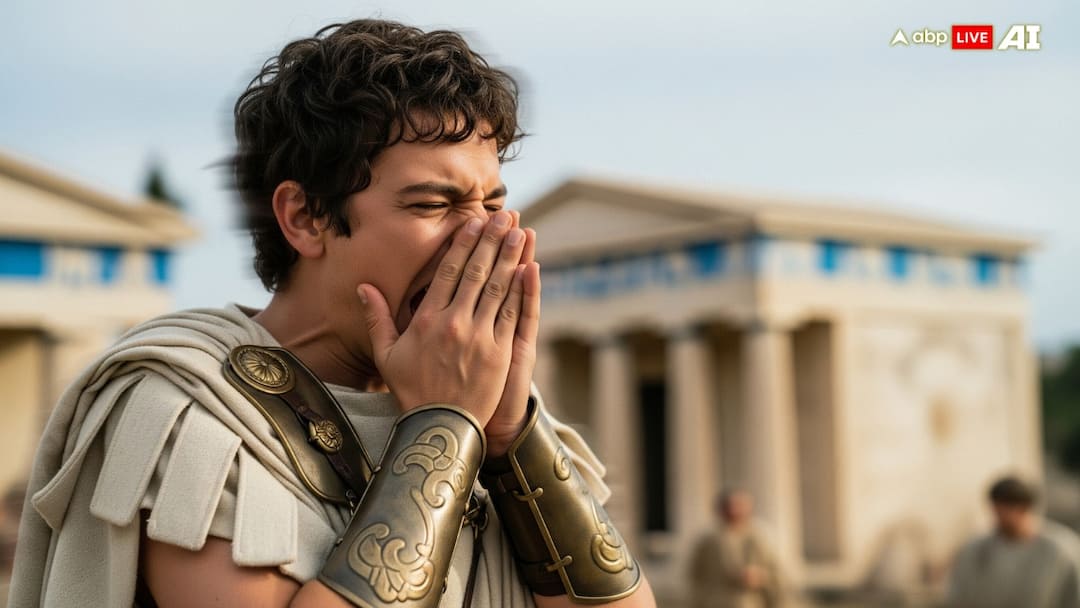
You sneeze, and almost instantly someone says, “Bless you.” But why? It’s not just habit; it is now almost a tradition. Those ritual traces all the way back to Homer’s Odyssey, where a sneeze was treated like a divine ‘thumbs-up’, and later to Pope Gregory I’s plague-era decree, when “God bless you” became a tiny prayer of protection.
Historically, sneezing has been a divine signal, a plague warning, and a social nicety all wrapped into one.
In Ancient Greece, Sneeze Was Itself A Blessing
A Papal Rule
Let's jump to the late 6th century CE, during the Bubonic plague in Rome. Sneezes became early warning signs.
Pope Gregory I was said to urge people to exclaim 'God bless you' immediately after someone sneezed, hoping those words would protect them from deadly disease. Within two centuries, that phrase had become a standard polite response across Christendom.
Over time, other beliefs became attached.
Some thought a sneeze might briefly expel your soul, leaving you vulnerable to evil spirits unless answered with a blessing. Others believed sneezing paused your heart, so a “Bless you” cheered your heart to beat again.
Today, It’s Just A Polite Habit
Nowadays, we don’t worry about Gods, plagues, or escaped souls when someone sneezes. In English-speaking countries, “Bless you” is simply a polite reflex. Other cultures offer similar responses: Germans say “Gesundheit,” Spaniards say “Salud”, the French say "à tes", the Turkish go "çok yaşa", and so on. But the overall message remains the same: "bless you and feel better."
So the next time you sneeze, and someone hits you with a “Bless you,” just smile. You didn’t just clear your nose, you unlocked centuries of drama, superstition, and social etiquette.
Who knew a sneeze could be that powerful?