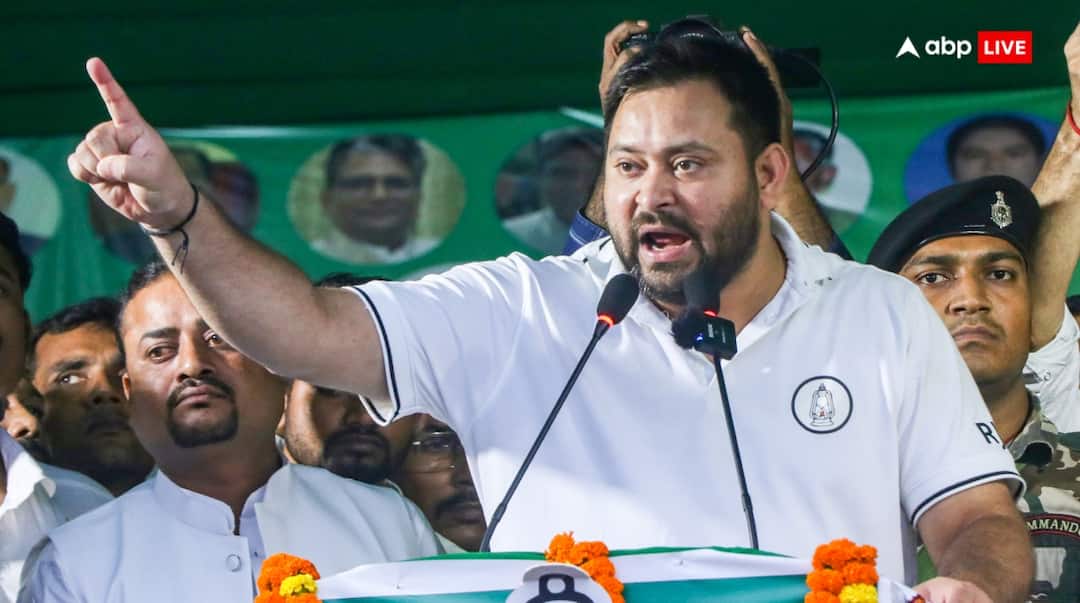
Despite securing a higher vote share than the BJP, the Rashtriya Janata Dal (RJD) is trailing significantly in terms of seats. According to Election Commission of India data as of 11:20 am, the RJD has polled 22.88% of the vote, slightly ahead of the BJP’s 22.18%.
However, the seat tally tells a different story: the BJP is leading in 82 constituencies, while the RJD is ahead in just 36.
The sharp divergence between vote share and seats highlights how constituency-level dynamics and vote distribution are shaping the outcome in Bihar.
A Look At 2020 Bihar Election
The 2020 Bihar Assembly election produced one of the closest finishes in the state’s recent political history. The NDA managed to secure 125 seats, just three above the majority mark of 122 in the 243-member House, while the Mahagathbandhan (MGB) finished with 110 seats. Despite the narrow 15-seat difference, the vote share gap between the two blocs was razor-thin: the NDA polled 37.26% of the vote, and the MGB 36.58%.
Among individual parties, the Rashtriya Janata Dal (RJD) emerged as the single largest party with 75 seats. The BJP closely followed with 74 seats. The Janata Dal (United) won 43 seats, and the Congress secured 19. The CPI(ML)-L performed strongly with 9 seats, while AIMIM made its presence felt by winning 5 seats.
Alliance-Wise Breakdown In 2020
Within the alliances, the RJD led the Mahagathbandhan with 75 seats and a 23.11% vote share. On the NDA side, the BJP topped with 74 seats and 19.46% of votes, followed by the JD(U), which won 43 seats with a 15.39% vote share. The Congress, contesting as part of the MGB, bagged 19 seats and 9.48% of the vote.