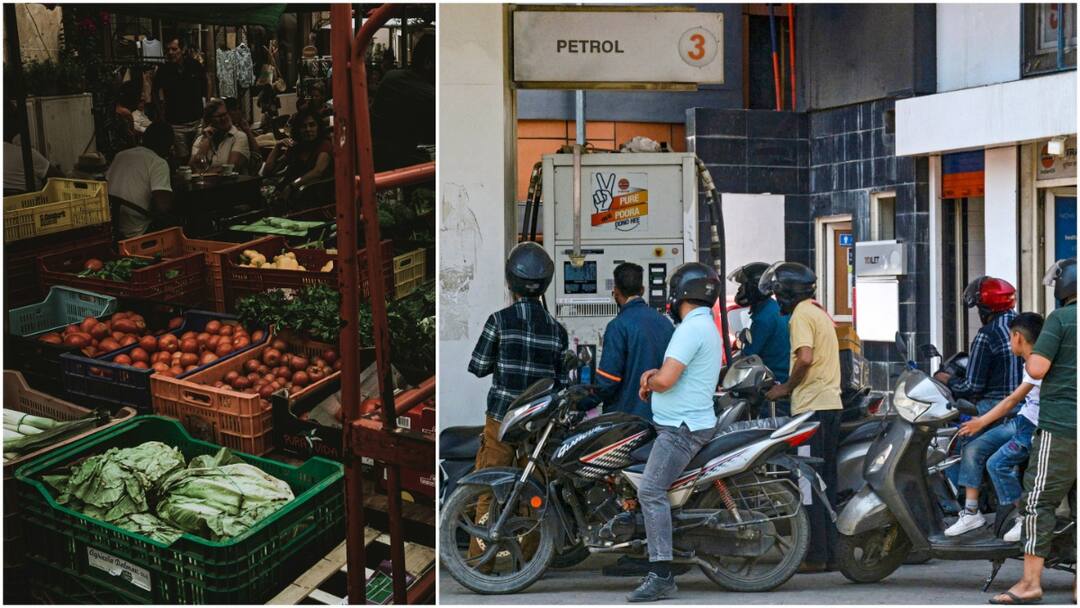
In order to prevent chaos and panic-buying, the Mohali district administration in Punjab has forbidden the stockpiling of essential items, including food and fuel. No individual, trader, or entity is allowed to stockpile essential commodities.
The Mohali district administration earlier received reports of people stockpiling food and essential items.
"It has come to notice that there are rumours spreading around that are causing hoarding of essential commodities such as food items, petrol, diesel, fodder, and other daily necessities. Although there is no panic and no shortage of essential items in the district," District Magistrate Komal Mittal said in a notification.
Blackouts And Sirens In Several Districts
Residents in several border regions of Punjab endured hours of anxiety and uncertainty on the intervening night of Thursday and Friday as authorities enforced widespread blackouts in response to intensifying military tensions between India and Pakistan. Districts, including Amritsar, Bathinda, Tarn Taran, Ludhiana, Hoshiarpur, and Ferozepur, were plunged into darkness as precautionary power cuts swept across the region.
The blackout extended to other parts of Punjab, such as Jalandhar and Chandigarh, the joint capital of Punjab and Haryana, bearing the brunt of a complete power outage for nearly two hours, ending around midnight.
The sudden move came after Pakistan reportedly launched a series of coordinated drone and missile attacks aimed at Indian military installations on Thursday night. According to the Ministry of Defence, the targets spanned multiple cities, including Jammu, Udhampur, and Pathankot. However, Indian forces acted swiftly, intercepting and neutralising the aerial threats before they could cause damage.
In all, 15 locations across northern and western India were targeted in the attempted strikes. These included major urban centres like Srinagar, Amritsar, Ludhiana, Jalandhar, Chandigarh, and Bhuj, among others. The timing of the attacks, just a day after India's Operation Sindoor, appears to have been a retaliation to India targeting terrorists.
Operation Sindoor was a series of precision missile strikes by Indian forces on terror launchpads in Pakistan and Pakistan-occupied Kashmir (PoK), carried out in response to the April 22 terrorist attack in Pahalgam.
In Pathankot, the situation grew especially tense. Locals reported hearing loud, explosions late on Thursday. Air raid sirens blared around 8:30 PM, prompting an immediate blackout. While no official confirmation of explosions was released, residents remained on edge throughout the night. By Friday morning, however, the atmosphere eased, and calm returned.
Similar stories unfolded in Amritsar and Ferozepur, where people spent the night indoors, anxiously following the news. Many expressed both fear and pride — fear over the unfolding events, and pride in the Indian military's prompt and effective response.
Authorities across the state urged citizens to stay indoors, comply with blackout protocols, and remain calm. Pathankot Deputy Commissioner Aditya Uppal asked citizens to remain vigilant. Power cuts were also reported in other cities, including Rupnagar, Fazilka, Kapurthala, Ludhiana, Sangrur, Bathinda, Patiala, and Panchkula in Haryana, as part of broader precautionary efforts to ensure public safety amid the ongoing tension.
In response to the evolving situation, the Punjab government announced the closure of all educational institutions for the next three days. Chandigarh officials followed suit, ordering all schools to remain shut until Saturday.