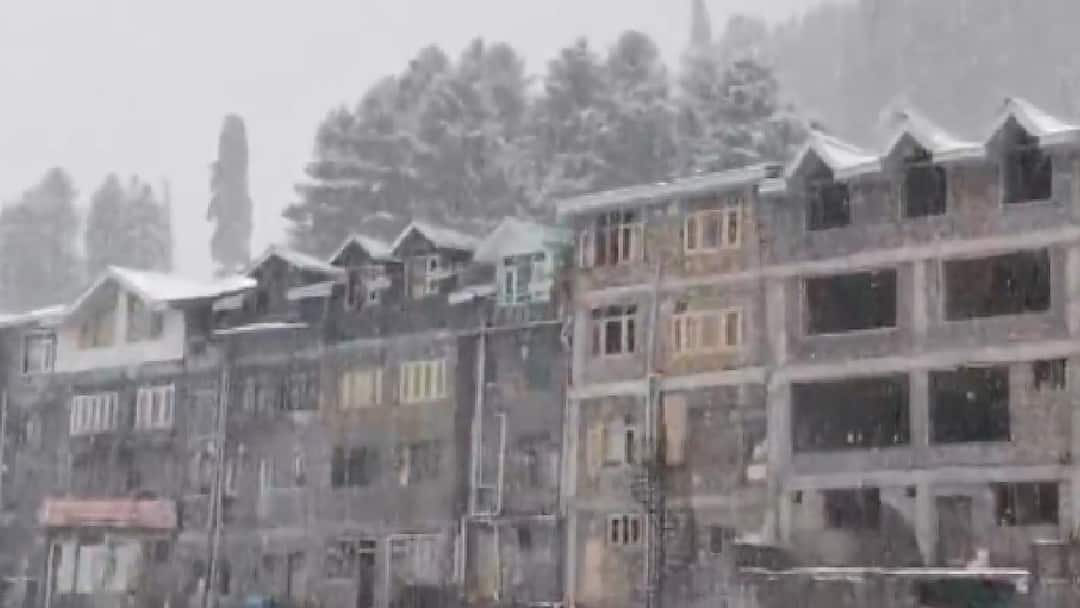
After nearly two months of dry, bone-chilling cold, Kashmir finally saw the first snowfall of the season, coinciding with the onset of Chilaikalan. The snow has offered much-needed respite to residents and revived hope across the valley, long parched by an unusually prolonged dry spell.
Snow Blankets Kashmir’s High Altitudes
Snowfall was reported across key areas, including the Gurez and Warwan valleys, as well as higher reaches in both north and south Kashmir, such as Sinthan Top, Razdan Pass, Sadhna Top, Zojila, and Sonmarg. Even Drass and parts of Kargil district experienced fresh snow, signalling a widespread wet spell across the mountainous belt.
Meanwhile, Anantnag recorded light rainfall caused by an active western disturbance, breaking the extended dry period that had gripped the region. For locals, the snowfall has been a welcome change after one of the harshest dry spells in recent memory, which had raised concerns over dwindling water sources and the shrinking flow of streams, rivers, and springs.
IMD Forecasts Intensifying Snowfall Across Jammu and Kashmir
The India Meteorological Department (IMD) has forecast moderate to heavy snowfall in the higher reaches of Jammu and Kashmir, particularly over the next two days. Officials warned that precipitation could become more widespread, potentially continuing intermittently until December 22.
This wet spell is expected to replenish glaciers and water bodies, easing the severe dry cold conditions and offering a lifeline to the valley’s shrinking water resources. The return of snow has also sparked cautious optimism in the tourism sector, which had been impacted by the lack of winter precipitation during what is typically peak season.
Chief Minister Omar Abdullah Reviews Winter Preparedness
Amid the changing weather, Jammu and Kashmir Chief Minister Omar Abdullah convened a high-level review meeting on winter preparedness for both the Kashmir Valley and the Jammu region. He assured that all arrangements were in place to manage heavy snowfall, although their effectiveness would be tested once the snow fully sets in.
“I reviewed preparedness in both divisions, especially in districts where snowfall is expected. Preparations are finalised, but the real test will come once it begins to snow,” Abdullah told reporters.
The chief minister acknowledged that snowfall could cause temporary inconveniences but highlighted its benefits: clearing the air, reducing pollution, and kickstarting the winter tourism season.
Road, Power, and Healthcare Systems in Focus
Abdullah emphasised that the administration’s winter response would be judged on three critical fronts: road clearance, uninterrupted electricity supply, and drinking water availability. Departments were directed to adopt a pre-emptive approach, ensuring manpower and machinery were deployed in advance rather than reacting after disruptions.
In the power sector, officials were instructed to monitor transformer oil supplies closely and prevent pilferage, while also maintaining a buffer stock of distribution transformers to minimise outages.
Healthcare preparedness was another priority. The administration called for 4x4 ambulances in remote areas, chain-fitted ambulances in challenging terrains, and mobile dewatering pumps in Srinagar to tackle potential waterlogging. Passenger facilities at the airport were also reviewed for resilience against weather-related flight disruptions.
Water Crisis Worsened by Prolonged Dry Spell
The extended dry period had pushed Kashmir into a serious water stress situation. Rivers, waterfalls, and natural springs recorded significantly reduced flow, with some areas seeing water bodies dry up entirely. Authorities were forced to regulate water discharge to ensure essential supply for drinking, irrigation, and aquatic life.
Government departments have already implemented water rationing in parts of the valley, highlighting the urgent need for both short-term relief and long-term water management strategies.
Climate Change is Disrupting Kashmir’s Weather Patterns
Experts warn that erratic weather in Kashmir is no longer unusual. Climate change is increasingly affecting the region’s traditionally stable weather, causing extreme variations such as intense rainfall over short periods, drought-like conditions, unusually hot summers, and prolonged dry cold winters.
“These shifts are no longer anomalies,” environmental specialists emphasised, pointing to climate change as the key factor disrupting Kashmir’s natural hydrological cycle.
While the current snowfall and rain provide temporary relief, experts stress that long-term planning and water conservation strategies are essential to protect the valley from future climate-related shocks.