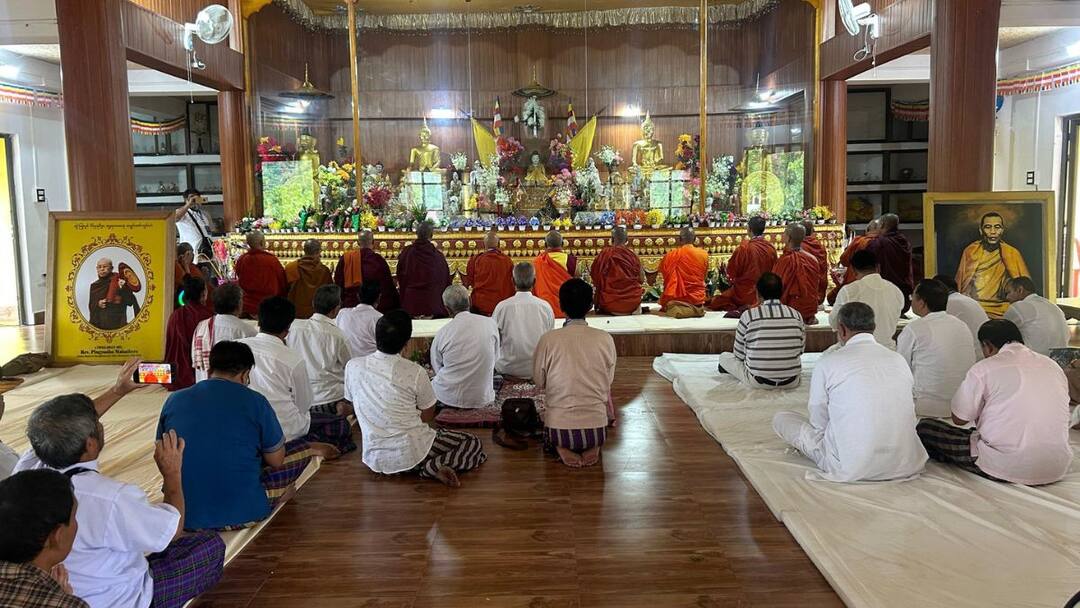
The International Buddhist Confederation (IBC), in collaboration with the Ministry of Culture, organised a two-day International Conclave at Namsai, Arunachal Pradesh, from Monday (April 21).
The conclave, titled 'Buddha Dhamma and the Culture of North-East India,' was inaugurated by Arunachal Pradesh Deputy Chief Minister Chowna Mein in Namsai, Arunachal Pradesh.
"North-East India, comprising Arunachal Pradesh, Assam, Manipur, Meghalaya, Mizoram, Nagaland, Sikkim, and Tripura, is a significant centre for Buddhist traditions, monastic culture, and heritage. The region has preserved and propagated various Buddhist traditions, including Theravāda, Mahāyāna, and Vajrayāna," a statement from the Ministry of Culture said.
The Centre is actively involved in several initiatives to promote Buddhist tourism, heritage conservation, and cultural exchange programmes to strengthen the presence of Buddha Dhamma in the region.
Buddhist monks and scholars from across India and other countries, including Cambodia, Myanmar, Thailand, and Bhutan, participated in the event.
The IBC organised the event at the Multipurpose Cultural Hall in Namsai to explore the significance of "Buddha Dhamma and the Culture of North-East India."
The first day of the event featured three panel discussions: on the historical relevance of Buddha Dhamma; its art and culture in the region; and the cultural impact of Buddha Dhamma on neighbouring countries.
The second day was dedicated to practising Vipassana and praying for world peace at the famous Golden Pagoda.
Buddhism reached Northeast India during the reign of Emperor Ashoka and expanded to other neighbouring regions. It has played a crucial role in the Buddhist cultural corridor connecting India to Southeast Asia.
The International Buddhist Confederation (IBC) is a global umbrella Buddhist body headquartered in New Delhi, India.
Established under the patronage of the supreme Buddhist religious hierarchy, it currently has a global membership, both monastic and lay, that includes world bodies, national and regional federations, orders, temple bodies, monasteries, and more.
The IBC was conceptualised during an international workshop in Delhi in 2011, where delegates from 11 countries unanimously agreed on the need to form a new international Buddhist organisation in India—the place of origin, development, and dissemination of the Buddha Dhamma—that would serve as a common platform for Buddhists worldwide.