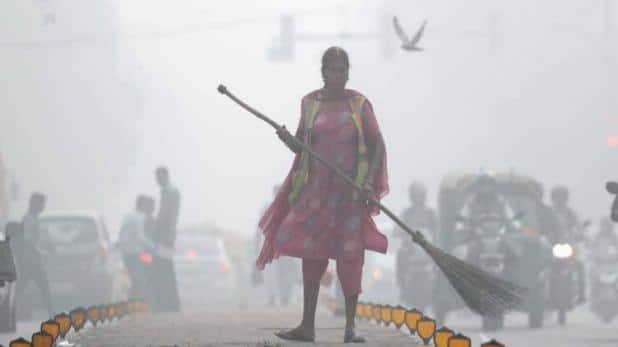
Delhi woke up to a grey haze and its worst air quality of the season on Tuesday, as the city’s overall Air Quality Index (AQI) plunged to 423, falling squarely in the “severe” category.
The toxic air prompted authorities to enforce Stage III restrictions under the Graded Response Action Plan (GRAP), a set of emergency measures designed to tackle extreme pollution episodes in Delhi-NCR. The curbs include a ban on non-essential construction, restrictions on BS-3 petrol and BS-4 diesel vehicles, and advisories for work-from-home to reduce vehicular emissions.
Very Poor Air In Delhi On Monday
The 24-hour average AQI on Monday stood at 362, categorised as “very poor”, according to the Central Pollution Control Board (CPCB). The latest spike pushed air quality into the “severe” bracket, where pollution levels can cause respiratory distress even in healthy individuals.
As per CPCB standards, an AQI between 0–50 is “good”, 51–100 “satisfactory”, 101–200 “moderate”, 201–300 “poor”, 301–400 “very poor”, and 401–500 “severe.”
Since Diwali, Delhi’s air quality has rarely improved beyond the “poor” zone, with emissions from vehicles, industrial activity, and stubble burning combining with stagnant winter winds to trap pollutants close to the ground.
Weather conditions have added to the crisis. The minimum temperature on Tuesday dropped to 10.2°C, around 4.1 degrees below normal, while the maximum is expected to hover near 28°C. The city also recorded its first cold wave of the season on Monday, when Aya Nagar reported a low of 9.9°C.