The Delhi government has rescheduled its much-anticipated cloud seeding trials due to unsuitable monsoon activity. The maiden trials were initially slated for early July, but following consultations with the India Meteorological Department (IMD) and the Indian Institute of Tropical Meteorology (IITM), Pune, the operation will now take place between August 30 and September 10, 2025.
Despite the shift in schedule, the Directorate General of Civil Aviation (DGCA) has granted clearance for the new dates, allowing the cloud seeding trials to proceed as part of the Delhi government's broader effort to mitigate air pollution.
The cloud seeding project, headed by Delhi’s Environment Minister Manjinder Singh Sirsa in collaboration with IIT Kanpur, will deploy a Cessna 206-H aircraft (VT-IIT) equipped with cloud seeding instruments to induce artificial rain.
The technique involves the release of hygroscopic particles such as sodium chloride into suitable cloud systems, with the goal of triggering precipitation and reducing airborne pollutants from the atmosphere.
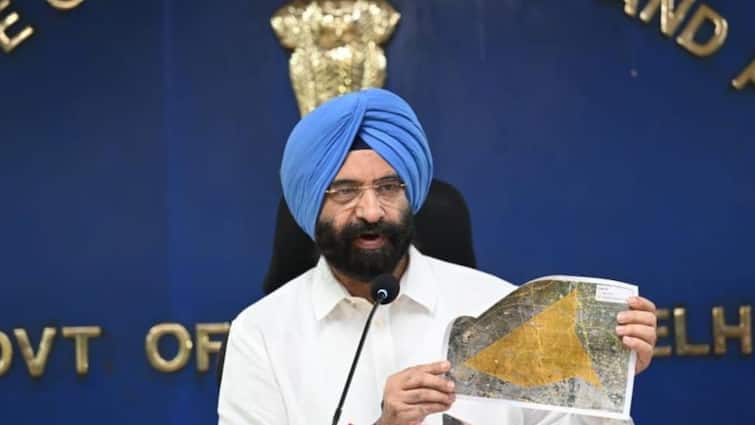
Speaking at Press Conference, Sirsa said while DGCA had approved a flight window from July 4 to 11, feedback from agencies suggested that prevailing monsoon patterns would not be conducive to effective seeding. Based on scientific recommendations, IIT Kanpur proposed an alternative window in late August, which the Delhi government accepted.
According to Delhi Government's plan, the trials will concentrate on pollution-prone zones including Alipur, Rohini, Burari, Bawana, Pavi Sadakpur, Kundli border, and select parts of the Eastern Peripheral Expressway. These regions were identified for their low dispersion rates and favorable cloud characteristics.
The aircraft will fly under Visual Flight Rules (VFR) and adhere strictly to DGCA protocols, including restricted airspace compliance, a ban on aerial photography, and real-time coordination with Air Traffic Control (ATC). All flight data will be recorded in accordance with CAR Section 3, Series N, Part I, and Air Transport Circular 1/2019, to ensure safety and regulatory transparency.
Sirsa further emphasised that these trials are part of a larger Environment Action Plan 2025, aimed at developing science-backed strategies to combat seasonal smog, particularly during the winter months when Delhi’s air quality often deteriorates sharply.
“This is not just an experiment, it’s preparation for the smog season. If the August–September trials yield promising results, we will be ready to scale this effort during October to December when Delhi’s air turns toxic,” Sirsa said at the press conference.
Slamming the previous Aam Aadmi Party-led administration, Sirsa claimed that earlier efforts were limited to formalities, whereas the current government had proactively engaged multiple agencies and fast-tracked implementation.
The results of the upcoming trials will be submitted to the Central Pollution Control Board (CPCB), scientific institutions, and judicial authorities, to evaluate the feasibility of extending cloud seeding measures across the National Capital Region (NCR) and to other cities facing air pollution.