A cloud seeding experiment aimed at inducing artificial rainfall in Delhi could be carried out on Tuesday, provided weather conditions improve in Kanpur, Environment Minister Manjinder Singh Sirsa said.
Sirsa noted that visibility in Kanpur currently stands at 2,000 metres. “Once it reaches 5,000 metres, the aircraft can begin the cloud seeding trial,” he said adding, "We hope that this will be possible by 12.30-1 pm. Then it will take off from there, do cloud seeding here and return".
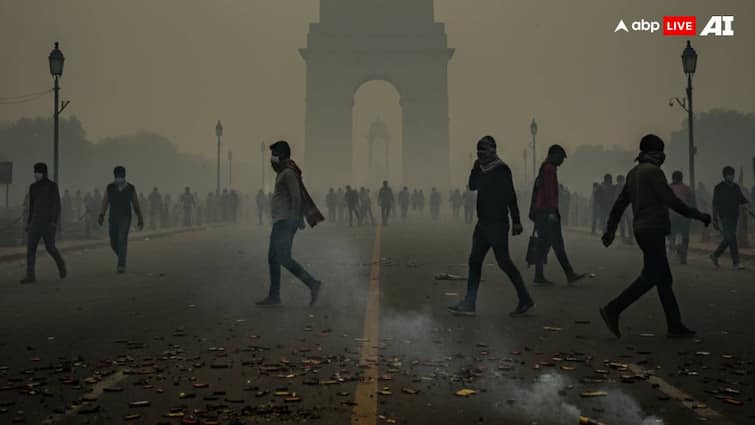
According to the Central Pollution Control Board (CPCB), Delhi’s air quality remained ‘very poor’ on Monday, while Anand Vihar recorded an AQI of 321 on Tuesday.
What Is Cloud Seeding And Why Is It Needed?
Cloud seeding is a scientific process used to trigger artificial rain by dispersing particles, such as silver iodide or salt-based compounds, into moisture-laden clouds. These particles help smaller droplets combine into larger raindrops, potentially leading to precipitation.
The upcoming trial is part of Delhi’s efforts to combat rising air pollution levels. Chief Minister Rekha Gupta recently called the initiative “a necessity” to address the capital’s worsening environmental crisis.
How Artificial Rain Process Will Work
Aircraft will disperse the chemical compounds directly into the clouds. A test flight over Burari last week released small quantities of silver iodide and sodium chloride, but low atmospheric moisture (below 20%) prevented rainfall — the ideal humidity level is around 50%.
Preparations for the trial have now been completed.
Why Kanpur’s Weather Matters
The aircraft being used for the experiment is stationed in Kanpur, making clear weather there essential for takeoff.
“As soon as the weather clears in Kanpur, our aircraft will take off today. If successful, cloud seeding will be conducted in Delhi to bring rainfall,” Sirsa told ANI.
A memorandum of understanding (MoU) was signed between the Delhi government and IIT Kanpur on September 25 to conduct five cloud seeding trials across the region.