In the intricate machinery of governance, where every officer is meant to be treated with utmost dignity and their talents utilised for the state's maximum benefit, the journey of Hari Chandana IAS stands as a compelling narrative of resilience, unwavering dedication, and profound commitment to public service. Her story is a testament to blooming where one is planted, even when the initial soil seems barren and the path less travelled.
For a significant period of her career, spanning from 2014 to 2024, Hari Chandana endured what many had then perceived as a profound professional slight. An officer of the 2010 batch, Telangana cadre, she was initially restricted to roles such as Zonal Commissioner in the Greater Hyderabad Municipal Corporation (GHMC), while many of her batchmates were entrusted with the comprehensive responsibilities of a District Magistrate (Collector).1 This phase, while arguably a humbling experience, tested her resolve.
However, a true administrator finds opportunity even when doors are shut. Hari Chandana proved that when direct paths are blocked, one must force open a window to serve the public. During her long tenure as Zonal Commissioner in GHMC, she actively worked on projects related to urban infrastructure and sanitation.2 She became widely known as an "eco warrior" for her pioneering work in waste management, notably overseeing the recycling of 25 million metric tons of plastic waste into paver tiles in 2017-18.3 Her GHMC office even earned the prestigious Green Standard Award.4 She initiated vital sustainability and public health programs, including waste recycling, telemedicine services, and women-led self-employment schemes.5 The "She Toilets" initiative, providing clean and safe sanitation for women, became a flagship project under her leadership, including innovative mobile facilities.6 She also established India's first exclusive pet park in Gachibowli. These accomplishments showcase her ability to innovate and deliver, utilising every perceived line platform to contribute to public welfare, regardless of the perceived limitations of her role.7
Later on, in continuation with the political vendetta, she was entrusted with a District Magistrate role, serving as the Collector of Narayanpet. Her posting to Narayanpet, a district bordering Karnataka that was widely considered one of the smallest, farthest, and, in hindsight, hastily carved out by the political dispensation of that time, particularly posed a heavy personal toll for an officer with a young child, yet she continued to serve with unwavering spirit. Adding to the perception of being sidelined for being honest and efficient, it was highly in the public domain that most of her colleagues, collectors holding district charges, were approximately six years junior to her and were assigned bigger districts, which tantamounted to a professional indignity that further highlighted the systemic issues at play.
During her tenure in Narayanpet, which coincided with the Covid 19 worldwide pandemic, she demonstrated her exceptional ability to dovetail a human crisis into a humane opportunity. She pioneered major initiatives which are one of its kind and which can be replicated pan India like Aarunya, an all-women cooperative enterprise, was envisioned to enhance the livelihood of weavers and artisans by directly connecting them to buyers through a strategic collaboration with Flipkart, leveraged telemedicine to serve rural communities for healthcare and wellbeing, and introduced digital literacy and entrepreneurship programs. Notably, she engaged 4,000 women in a mask-making enterprise during the pandemic, which generated a profit of Rs 50 lakh in a year and earned her the British Council's Social Impact Award( the only Indian to have received the award during that year ). She also leveraged and initiated during the pandemic a digital interface called T-Consult, a telemedicine interaction that connects doctors to rural patients.
This never-ending period of being sidelined gave an impression of a systemic failure deep rooted with caste and gender bias. For a state aspiring to be a "sunrise state," the alleged oversight and lack of insight into administration, coupled with what was widely observed as insecurity, hereditary antagonism, and sheer lack of administrative insight, sidelined a true gem of an administrator. Perhaps her "crime" was being a Native Telanganite/ Woman/ Dalit or all encapsulated in one, laced with honesty and efficiency, which works as an anathema to family dispensations, more so by regional parties. It was, arguably, one of the greatest administrative blunders of that era by what was then a self-proclaimed revolutionary leader of this nascent state. Adding to the humiliation, a performance-packed Dalit IAS officer like her was even kept waiting without a post for 8 months by KCR, an utter waste of a highly valuable resource to the state. Instead of leveraging her immense talent, a valuable resource was seemingly kept as a castaway.
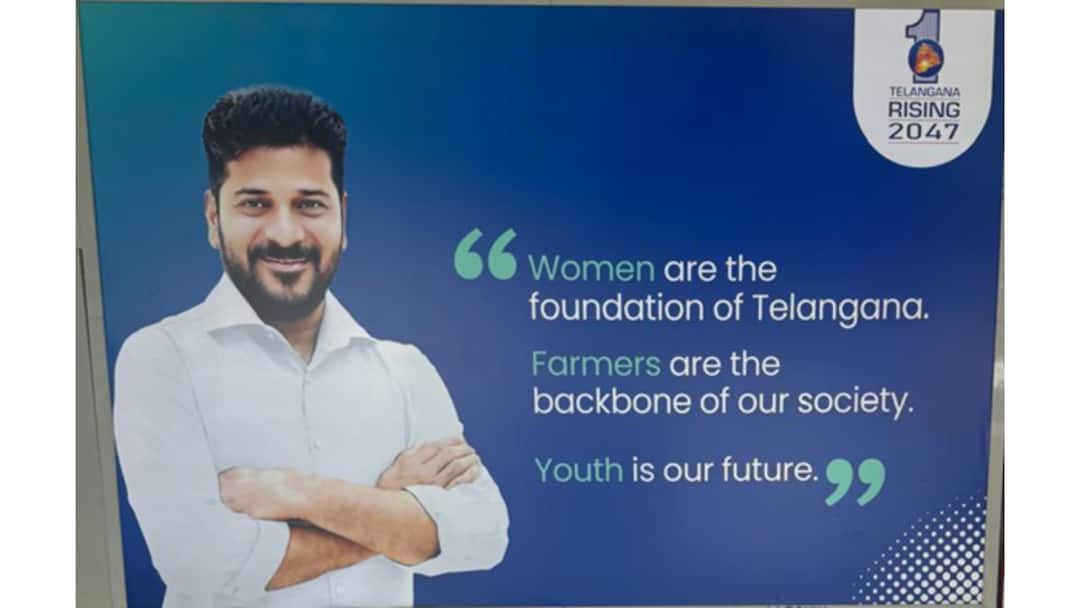
However, the tide of change is inevitable. Come 2024-25, a historic first unfolded in Telangana. A government was formed by the INC, a national party, marking a significant departure from the previous self-proclaimed family-ruled regional party. With this shift came a renewed commitment to diverse representation and maximising the available administrative potential. Hari Chandana IAS is now serving as the Hyderabad District Collector, thanks to the visionary CM Shri A Revanth Reddy.
Hari Chandana's journey against all odds is a conspicuous reminder to the entire public and to the future governments: officers of her calibre—those who demonstrate unwavering honesty, innovative spirit, and a profound dedication to public service even in the face of adversity—are invaluable assets. Their potential should never be curtailed due to inherent societal factors such as Caste/gender/identity. Such individuals are the backbone of effective governance, and their capabilities must be fully utilised to maximise the benefit to the state and its citizens. Investing in and empowering such dedicated officers is not just good governance; it is the cornerstone of true state progress and prosperity.